
Recently, I listened empathetically as a friend shared her experience of not receiving her “Ajo contribution” of over N250,000 when it was her turn to collect. She was expressively disappointed. That was the painful reality no one wants to be in.
Every few months, we hear new accounts of people losing their savings in failed cooperative schemes. The common reaction is, “Ajo is no longer safe.” But is the problem truly ajo itself, or has Nigeria’s financial landscape evolved beyond what traditional cooperative savings were originally designed to manage?

For decades, ajo has helped millions of Nigerians save consistently, fund businesses, pay school fees, organise weddings, and navigate financial emergencies. Long before digital banks, automated savings apps, and fintech platforms became part of everyday life, cooperative savings had already become woven into Nigeria’s financial culture.
Today, however, the financial landscape looks very different. The average Nigerian no longer keeps money in just one place. We now earn from multiple income streams, save across different platforms, invest digitally, pay taxes, manage debts, and budget for recurring expenses. Our financial lives have become more connected, yet more fragmented.
This raises an important question.
Is Ajo still safe in Nigeria in 2026, or has the conversation evolved beyond safety to something much bigger?
The truth is that safe means something different today than it did twenty years ago. Back then, safety meant trusting your ajo collector to keep accurate records and pay members on time. In 2026, safety also means having complete visibility into your finances, understanding where your money is going, and ensuring every financial decision supports your long-term goals.
Before we answer whether ajo is still safe, we first need to understand why it has remained relevant for generations.
Why Did Our Grandparents Create Ajo?
Contrary to popular belief, cooperative savings are not a recent innovation. They have existed in different forms across many African societies for centuries.
Among the Yoruba, this system is known as Ajo. Similar community-based savings systems exist across Nigeria, including Esusu among the Igbo and Adashe in Northern Nigeria. Although the names differ, the principle remains the same: a group of people contribute a fixed amount at agreed intervals, with each member receiving the pooled funds in rotation. These systems emerged long before formal banking became accessible to everyday Nigerians. Rather than relying on financial institutions, communities relied on one another. Trust became the currency, while consistency became the discipline that kept the system alive.
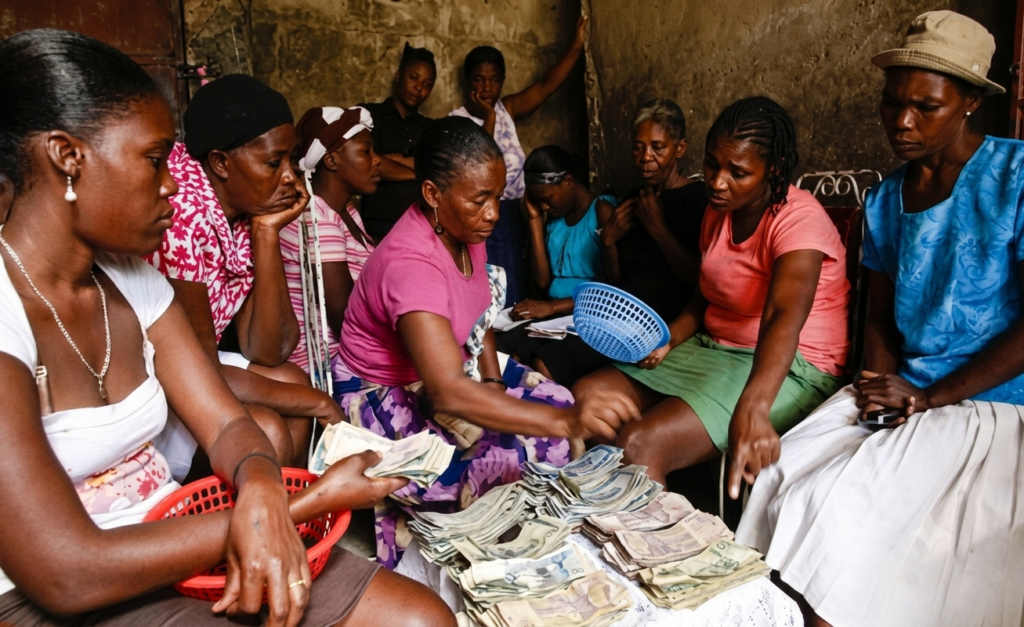
Ajo was designed to solve everyday financial problems. People used it to expand their businesses, pay school fees, sponsor apprenticeships, organise weddings and celebrations, support their families, and raise capital when conventional loans were either unavailable or unaffordable.
Over time, the concept spread beyond the Yoruba community. Similar cooperative savings systems flourished across Nigeria and other parts of Africa. Historians have traced versions of these rotating savings models to African communities in the Caribbean and Latin America, where they were preserved by descendants of enslaved Africans. More recently, Nigerian communities abroad, including students and professionals in the United Kingdom, Canada, and the United States, have adapted ajo to fit modern lifestyles. That longevity says something important. Ajo has survived not because it is old, but because it has always met its target.
Why Has Ajo Survived for Generations?
The greatest strength of ajo has always been people. At its core, ajo is built on three principles: trust, discipline, and collective responsibility. Members commit to contributing a fixed amount weekly or monthly, and each participant receives the total contribution in turn. In some groups, individuals may take multiple slots, increasing both their contributions and eventual payout based on their financial capacity.
The system created financial discipline long before budgeting apps and digital reminders existed. It enabled traders to restock their businesses, parents to pay school fees, artisans to purchase equipment, and families to prepare for major life events without depending on traditional banks.
For many Nigerians ajo was their first introduction to structured financial planning. Even today, that behavioural discipline remains one of ajo‘s greatest strengths. After all, technology can automate transactions, but it cannot replace the accountability that comes from a community committed to helping one another stay financially disciplined.
Yet while the principles behind ajo have remained the same, the financial realities of Nigerians have changed dramatically. And that is where the conversation begins to shift.
Ajo in 2026: The Rules of Money Have Changed
A trader in 1995 probably had three major financial responsibilities: feeding the family, growing the business, and contributing to ajo. Financial planning was relatively straightforward because income and expenses were often limited to a few priorities.
Fast forward to 2026, and that reality has changed completely.
Today’s Nigerian may earn a salary while running a side hustle, receive freelance payments in dollars, invest through a digital platform, contribute to a cooperative society, pay utility bills online, subscribe to digital services, save for emergencies, repay loans, and still have tax obligations to think about. In other words, our financial lives have become more sophisticated and complicated.

The average person is no longer managing one source of income or one savings plan. They’re managing an entire financial ecosystem.
That is why the conversation should no longer be, “Is Ajo Still Safe?”
The better question is:
“Can one savings system still give me complete control over my finances?”
The answer, for many people, is no. That doesn’t mean ajo has failed. It simply means the problem it was originally created to solve has grown.
So, Is Ajo Still Safe in Nigeria and in 2026?
The short answer is yes, but with an important condition.
If you’re contributing through a trusted collector or a properly managed cooperative society with transparent processes, ajo can still be a reliable way to save and access lump sums when needed.
However, in 2026, safety means more than trusting the person collecting your money.
It also means knowing whether your finances are organised. It means understanding how your savings relate to your debts, investments, taxes, recurring expenses, and long-term financial goals. In other words, financial safety is no longer just about protecting your contributions. It’s also about protecting your financial future.

Where Traditional Ajo Falls Short Today
Let’s be clear: these are not reasons to abandon ajo. They are reasons to recognise that saving money alone is no longer enough.
1. Limited Financial Visibility
Most contributors know exactly how much they have paid into their ajo. What many don’t know is their complete financial position. Take a salary earner who earns ₦300,000 every month and contributes ₦100,000 to a cooperative. On the surface, they’re doing well because they’re saving consistently.
But what if they also have outstanding loan repayments, unpaid utility bills, growing credit card debt, or investment opportunities they’re missing because all their focus is on one savings commitment? Saving consistently does not automatically mean you’re financially healthy. Without a complete picture of your finances, it’s easy to mistake activity for progress.
2. Your Money Exists in Different Places
This is one of the biggest challenges facing Nigerians today:
Your ajo contribution is with your cooperative.
Your salary is sitting in your bank account.
Your investments are on another platform.
Your emergency savings are somewhere else.
Your tax records may not even exist in one place.
Your expenses are spread across transfers, POS payments, and subscriptions.
Individually, each platform solves one problem.
Collectively, they leave you with a fragmented financial life.
Instead of having one clear picture of your money, you’re constantly switching between apps, notebooks, bank alerts, spreadsheets, and memory just to understand where you stand financially.
3. Saving Doesn’t Always Create Financial Awareness
One of the biggest misconceptions about saving is that it automatically leads to better financial decisions. It doesn’t. Saving money and understanding money are two different things. Many ajo contributors still struggle to answer questions like:
- Where is my money actually going each month?
- Am I saving enough for my goals?
- Am I spending more than I realise?
- How much debt do I currently owe?
- How much should I be setting aside for tax?
- Am I genuinely building wealth, or simply moving money around?
These aren’t questions an ajo collector is expected to answer. They’re questions every individual should be able to answer for themselves right now.
Where Fintel Suite Fits In
Ajo is still relevant. What’s changing is how we manage the rest of our finances. That’s where Fintel Suite comes in.
Rather than replacing cooperative savings, Fintel Suite complements them by bringing your savings, debts, investments, taxes, and expenses into one organised dashboard. Instead of juggling multiple apps and records, you get a complete view of your financial life, making it easier to make smarter financial decisions.
Your Takeaway
For generations, ajo has taught Nigerians the discipline of saving. Digital finance has made saving more convenient. The next evolution is financial clarity.
So, perhaps the question is no longer, “Is Ajo still safe in 2026?” Instead, ask yourself, “Do I truly understand my money?”
Lasting wealth is built by knowing where every naira comes from, where every naira goes, and making every financial decision count.
Fintel Suite helps you do exactly that. Sign up today by clicking the button below.