
For years, technology has revolutionized two fundamental aspects of life: learning and managing money. Education has become far more accessible. Finance has grown dramatically more convenient. Yet one persistent gap remains. People now have powerful financial tools at their fingertips but little real understanding of how money truly works. This unmet need is giving rise to a powerful new niche.
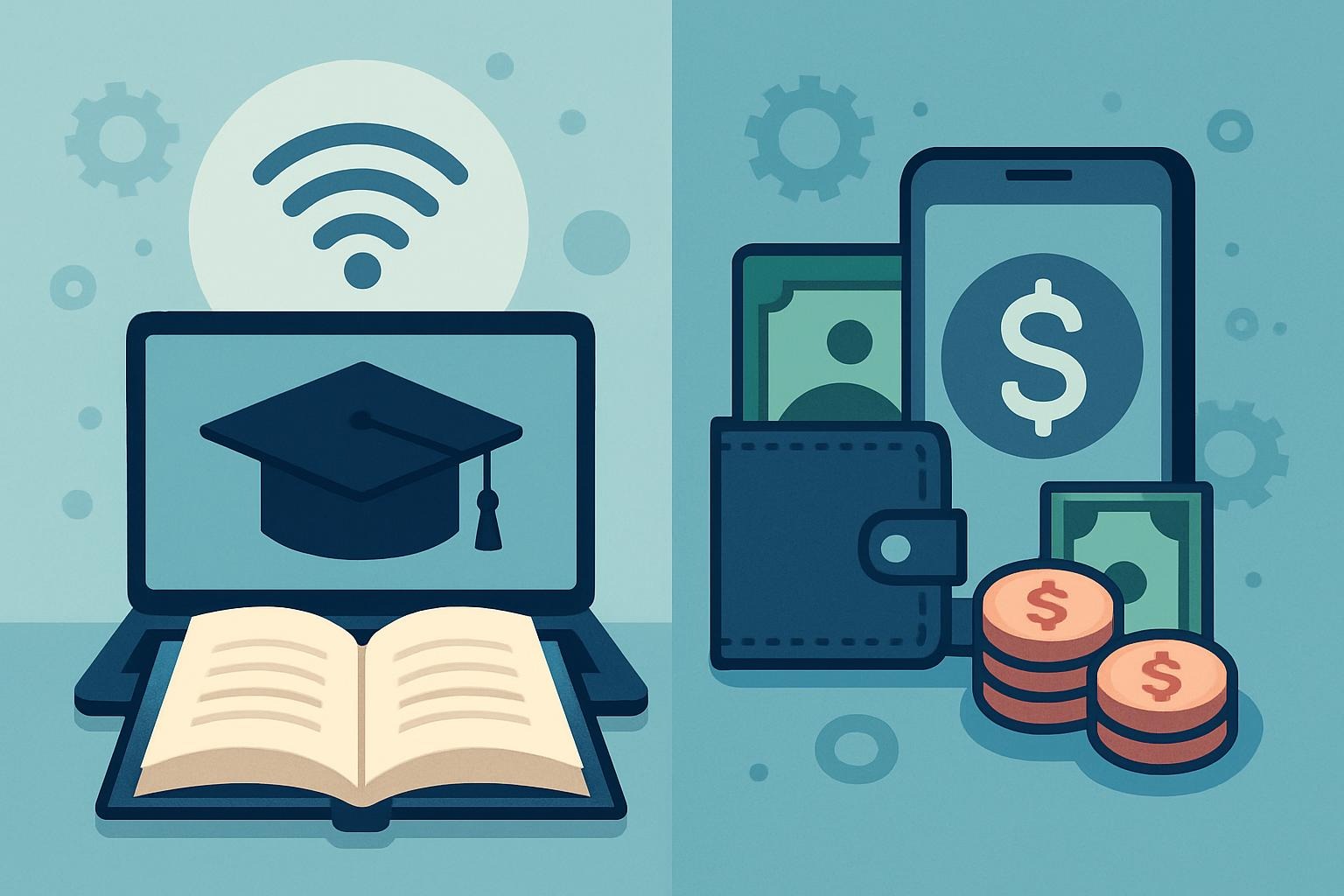
That niche is FinEdTech – Financial Education Technology.
How EdTech Transformed Learning
Before technology intervened, education followed a rigid structure with fixed paces, locations, and institutions. EdTech shattered that model. Platforms like Coursera, Udemy, Khan Academy, Duolingo, and YouTube made learning personal, flexible, and lifelong. Skills once confined to classrooms could now be acquired anytime, anywhere, often from a smartphone, frequently for free or at minimal cost.
EdTech did not merely digitize education. It democratized knowledge. It transferred power from gatekeeping institutions to individuals, enabling people to own their growth. Learning evolved from a one-time event into an ongoing, self-directed process. This shift has fueled massive market expansion. The global EdTech sector reached USD 163.49 billion in 2024 and is projected to hit USD 348.41 billion by 2030, growing at a compound annual rate of 13.3 percent.
How FinTech Simplified Access to Money
FinTech mirrored this disruption in finance. Traditional banking was slow, exclusionary, and often intimidating. FinTech removed those barriers. It enabled instant payments via Paystack and Flutterwave, mobile banking through Kuda and Opay, and accessible savings and investing with Piggyvest, Cowrywise, Bamboo, Rise, and others.
FinTech made moving, saving, and investing money dramatically easier and more inclusive. It demolished barriers and unlocked opportunities previously out of reach. In Africa, this has driven remarkable adoption. Sub-Saharan Africa saw account ownership double to 49 percent of adults since 2011, largely thanks to mobile money. According to McKinsey, FinTech revenues on the continent could climb to USD 47 billion by 2028, up from USD 10 billion in 2023. Yet while it excelled at access and convenience, it largely left understanding untouched.
The Hidden Cost of Access Without Understanding
Today, millions engage with sophisticated financial tools daily. Yet many remain unclear about the fundamentals of their own financial lives. They pay taxes without grasping the calculations, save and invest without fully weighing the implications, and rely on assumptions, hearsay, or rushed advice rather than informed foresight.

This imbalance is costly. Access without comprehension breeds poor choices, unnecessary losses, and chronic stress. Convenience can conceal confusion. Automation can mask ignorance. Over time, that ignorance exacts a heavy price. Globally, only one in three adults is financially literate, leaving about 3.5 billion without basic financial concepts. In the US alone, financial illiteracy costs individuals an average of USD 1,506 in 2023, totaling over USD 388 billion nationwide.
Introducing FinEdTech
FinEdTech bridges this exact gap. It is neither generic finance content in digital packaging nor another transaction-focused FinTech app. Instead, it lives at the intersection of education and finance, with a precise mission. That mission is equipping people to deeply understand, internalize, and apply financial knowledge in real-world decisions.
FinEdTech tools translate complex rules, obligations, and choices into clear, practical insights. The aim goes beyond information. It builds genuine confidence, sharper judgment, and lasting behavioral change.

Why True Financial Literacy Demands Internalization
A common misconception treats financial literacy as a collection of facts. In truth, it is a way of thinking. It involves how you evaluate options, anticipate consequences, weigh risks, and navigate trade-offs. It manifests in consistent behavior long after the lesson has ended.
As a FINTEL Coach, my work has always emphasized internalization. This means knowledge that shapes decisions instinctively rather than superficially. FinEdTech extends this philosophy through technology. It transforms financial education from something memorized to something lived.
How FinEdTech Differs from FinTech
FinTech excels at execution: fast payments, seamless saving, effortless investing. FinEdTech prioritizes understanding and foresight. It addresses the critical questions that precede and follow action. Should I proceed? What is the optimal amount? What are the risks and legal implications? How can I plan proactively?
FinEdTech complements FinTech rather than competing with it. One streamlines transactions. The other cultivates intelligence.
What FinEdTech Unlocks
When people truly grasp their financial reality, everything shifts. Reaction gives way to planning. Compliance becomes confident rather than fearful. Costly mistakes decline, long-term decisions improve, and individuals stop outsourcing their thinking. They begin owning their financial future.
This is FinEdTech’s core promise: not merely better tools, but markedly better judgment. With global financial illiteracy affecting billions and costing economies hundreds of billions annually, FinEdTech offers a timely path to empowerment.

For instance, the tools featured on Fintelcoach’s “FinTools – The Complete Financial Success Toolbox” exemplify the diverse range of my proprietary FinEdTech solutions designed to enhance financial literacy and management. These tools include budgeting apps, investment trackers, debt calculators, and savings planners, all aimed at empowering users to take control of their finances with ease.
By integrating technology with financial education, these FinEdTech resources provide practical, user-friendly ways to develop sound financial habits, make informed decisions, and ultimately achieve financial success.
What Lies Ahead
In the coming weeks, I will explore and even launch a new generation of financial-education technology applications. These are designed to help individuals and businesses gain clarity, anticipate obligations, plan proactively, and make sound, legally grounded decisions free from confusion and avoidable expense.
This piece is the opening of a series. The next part will examine how these tools and apps function in practice and why they signal a fundamental shift in our approach to money, education, and technology.
FinEdTech has arrived. It is reshaping how we learn about, think about, and decide with money. Stay tuned for more insights, and consider how these tools could transform your own financial journey.
Subscribe to my newsletter below to stay updated on when I post next.
Pingback: You Don’t Have a Money Problem. You Have a System Problem - FintelCoach
Pingback: Nigerian Tax Engine 2026 - TaxIntelNG is LIVE! - FintelCoach
Pingback: Why Financial Apps Fail Without Integration (and What a Unified Financial System Should Look Like) - FintelCoach
Pingback: The Philosophy of FINTEL Suite: A Financial Operating System for Africa